

Today, when I want to buy anything from kitty litter to tennis shoes, I grab my phone and search for it. Same for when I want to book an appointment at a local nail salon. I’ve tried to recall when that started, but I can’t remember. I grew up in a time when we actually found out about local businesses in the Yellow Pages. But today? Today it’s Google Search and Yelp, sprinkled in with some random recommendations from Social Media Influencers. A lot goes into it, but a great website is one of the most important elements of your marketing arsenal.
Today, your potential customers may be looking for something you can provide, but they may never find you if you don’t have a strong enough online presence. In the digital era, having a website is not just an option but a necessity for small and medium-sized businesses. Today, let’s explore basic SMB website essentials to better understand why websites are crucial for business and how they can drive growth, increase credibility, and enhance customer engagement–all of which can enhance your bottom line.
Table of Contents
The Digital Shift: Why Online Presence Matters
For many years, traditional marketing methods such as print ads, billboards, direct mail, and word-of-mouth were the go-to strategies for small businesses. While these methods are still effective in some cases, they have significant limitations. They often require substantial investments, come with inherently limited reach, and offer minimal ways to measure effectiveness accurately. As consumer behavior has evolved, so too has the landscape of marketing, leading to a significant shift towards digital marketing as a cost-effective way to increase the reach of SMBs everywhere.
Today, having a website is key to business operations, prospect interaction, and gold-standard customer service. Here’s what a website can do for you:
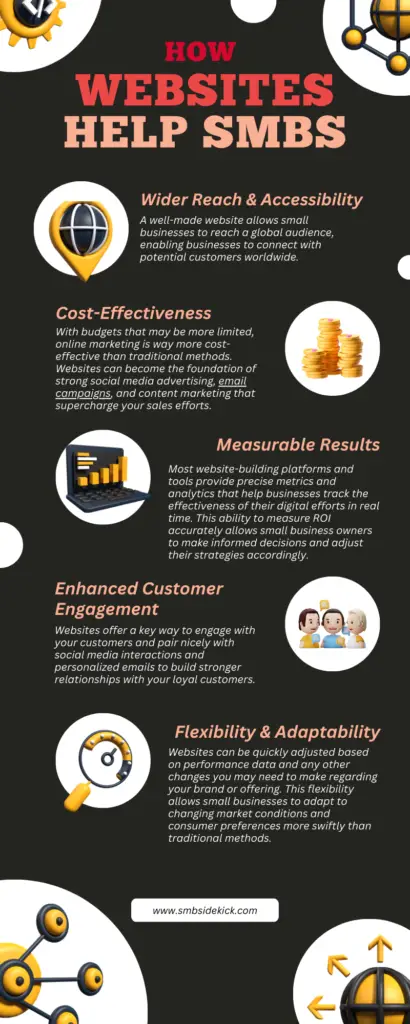
- Wider Reach and Accessibility: A well-made website allows small businesses to reach a global audience, enabling businesses to connect with potential customers worldwide.
- Cost-Effectiveness: With budgets that may be more limited, online marketing is way more cost-effective than traditional methods. Websites can become the foundation of strong social media advertising, email campaigns, and content marketing that supercharge your sales efforts.
- Measurable Results: Most website-building platforms and tools provide precise metrics and analytics that help businesses track the effectiveness of their digital efforts in real time. This ability to measure ROI accurately allows small business owners to make informed decisions and adjust their strategies accordingly.
- Enhanced Customer Engagement: Websites offer a key way to engage with your customers and pair nicely with social media interactions and personalized emails to build stronger relationships with your loyal customers.
- Flexibility and Adaptability: Websites can be quickly adjusted based on performance data and any other changes you may need to make regarding your brand or offering. This flexibility allows small businesses to adapt to changing market conditions and consumer preferences more swiftly than traditional methods.
Websites = Trust + Credibility
Trust is paramount in business, and a professional website builds trust and establishes credibility by showcasing your brand’s expertise and reliability. When you are not in a face-to-face interaction, your website is the face of your business.
High-quality design, clear navigation, and valuable content reflect your commitment to excellence. Features like customer testimonials, case studies, and industry certifications validate your reputation. Content that speaks to your customers (and doesn’t speak *at* them), that is free of too much industry-speak, translates into conversions. Secure protocols and privacy policies demonstrate your dedication to protecting customer data. Regularly updated content and a responsive design enhance user experience, showing that your business is active and customer-focused. Together, these elements create a positive first impression, making potential customers more likely to trust and engage with your business.
Elements of a Great Website
1. Effective Design
When it comes to great SMB websites, great design is numero uno. Site responsiveness and optimized navigation are the keys to helping your customers find you and decide on your products and services.
- Improves User Experience: Easy-to-find content that can be easily read from any device or setting provides your customers flexibility and convenience… something we all love.
- Saves Your Customers’ Time: Clear navigation allows customers to locate your products, services, or contact information swiftly, while optimized performance ensures faster loading speeds.
- Increases Engagement: Users are engaged when they have a great experience on business websites. A positive, consistent experience will encourage them to explore easily accessed new sections, leading to longer engagements
- Enhances Trust: A well-organized, quickly-moving website reflects the professionalism and reliability you provide to your customers and proves that you are all about high satisfaction rates.
- Leads to Higher Conversion Rates: Simplified navigation will guide your users through the sales funnel smoothly, increasing your chances of completing a purchase or taking other desired actions. Isn’t that what we’re here for, after all?
2. Value-Driven Content
Creating effective web content is crucial to attracting and retaining customers for all kinds of SMBs. Here are topics and considerations when creating content:
Products & Services
- Provide Clear Descriptions: detailed and accurate descriptions of your products and services, highlighting benefits and any other unique selling points, will go the distance for product and service sales.
- Professional is as Professional Does: Use professional photos and videos to showcase your offering and enhance the user experience but don’t be afraid to create your own content. Sharing your experiences can go a long way, depending on your business type—just be sure to create content that shows you and your business in the most positive light.
- Categories, Filters, & Search (Oh My!): Consider ways your customers navigate and ensure you have the essential functions available to locate what they need quickly.
Customer Reviews & Testimonials
- Authentic Reviews: Display genuine customer reviews and testimonials to build trust and credibility. Positive feedback from actual users is a form of social proof and influences purchasing decisions.
- Prominent Placement: Place your reviews & testimonials where they can be seen. Look to place them on your home page, product pages, or a dedicated testimonials page.
Blogging
- Relevant Topics: Write blog posts on topics relevant to your industry and audience. Consider Tips & Tricks, How-To Guides, Industry News, or other Company Updates.
- SEO Optimization: We’ll discuss this in greater detail in a future article, but blogs (like the one you’re reading right now) are a great way to optimize your website with relevant keywords that build search authority, improve search engine rankings (SERP), and drive organic traffic.
- Engaging Content: Sharing valuable content that addresses your audience’s needs and interests is a great way to keep your audience on your website and you at the top of their minds. Adding new blog content gives your audience even more reason to come back to your site and keeps your website dynamic.
About Us Page
- Company Story: If there’s one thing SMBs have in spades, it’s a company story. Share your history, mission, and values to build connections with your customers.
- Team Introduction: This is a great space to introduce team members with photos and brief bios, adding a personal touch to help build trust.
- Achievements and Certifications: It’s time to brag up your business! Highlight any awards, certifications, or notable achievements to establish credibility and subject matter authority.
Contact Information
- Accessible Contact Details: Make sure it’s easy for customers to contact you by providing multiple contact options, including phone, email, and a contact form.
- Location: If you have a physical location, include your address and business hours, and consider a map to help them find you in person.
3. Timely, Regular Updates
Regularly updating your website is vital for several reasons:
- SEO Improvement. Search engines favor fresh, relevant content, improving SERP and increasing visibility.
- Reflecting Business Changes. Always check your website to ensure it accurately reflects changes in product, service, or company information.
- Building Trust and Authority. Consistent updates show search engines and customers that your business is active and authoritative in your industry.

Updating content doesn’t need to overtake your life. There’s lots of advice on how often to post a blog, sometimes once or more a week, but that might not be realistic for all SMBs. So, just set a realistic tempo you want to reach and keep up with it. Set a realistic schedule for yourself and keep up with it, especially in the beginning. And be aware of all the other things you will want to keep updated: products and services, customer reviews & testimonials, and your About Us and Contact information.
Driving Sales & Lead Gen Efforts
A well-optimized website is not just a digital presence; it’s a powerful sales tool that can significantly boost revenue for small and medium-sized businesses (SMBs).
Showcase Your Products & Services
When customers get comprehensive details, specifications, and information on how your product or service benefits them, they feel empowered and in control of their purchasing decisions. If you have customer reviews for a specific product, a product page is a great place to put it to use.
Consider integrating your website with e-commerce, giving your customers the “shopping cart experience”—where they can easily add products and services and proceed to checkout. Ensure they can save items for later and are encouraged to view related products to increase order value.
Capturing Customer Info + Lead Generation
- Contact Forms: Strategically placed contact forms allow potential customers to easily reach out for more information, quotes, or consultations. Simple, user-friendly forms with clear CTAs can significantly increase lead capture rates.
- Landing Pages: Dedicated landing pages for specific campaigns, promotions, or products are highly effective for lead generation. These pages are designed with a clear focus, compelling copy, and strong CTAs to convert visitors into leads.
- Lead Magnets: Offering valuable content such as eBooks, whitepapers, or exclusive access in exchange for contact information can attract potential leads. This strategy captures leads and positions your business as an authority in your industry.
- Live Chat and Chatbots: Implementing live chat or AI-powered chatbots on your website allows real-time interaction with visitors. This can quickly address their queries, provide personalized assistance, and capture leads by collecting contact information.
- Email Sign-Ups: Encouraging visitors to sign up for your newsletter or email updates keeps them engaged with your brand. Regularly sending valuable content, promotions, and updates helps nurture these leads and convert them into customers.
Wrapping It All Up
The shift from traditional to digital marketing has made websites key tools for reaching a global audience, offering cost-effective solutions, and providing measurable results. Websites allow SMBs to connect with potential customers worldwide, breaking geographical barriers and maximizing their marketing spend through budget-friendly online strategies. Your website can serve as a cornerstone of your business, driving growth, increasing credibility, and enhancing customer engagement.
If you already have a website, perhaps now’s a good time to audit its effectiveness. If you find your website lacking, implement a strategy or two to enhance it so that it can be the powerful tool we all know it can be. And, if you don’t have a website yet, you can take a sigh of relief as there are many options out there for you: numerous web hosts, website builders, and professional marketers are ready to help you establish your online presence quickly and easily.
References:
“20 Ways to Build Trust with Your Website Visitors” – Gareth Roberts, May 2024
https://www.orientation.agency/insights/20-ways-to-build-trust-with-your-website-visitors

